Fleming Fund Results: Tackling AMR
1.14 million worldwide deaths were attributable to bacterial AMR in 2021. This is estimated to grow to as many as 8.2 million a year by 2050. The Fleming Fund is supporting grantees to strengthen AMR surveillance in human, animal and environmental health across Africa and Asia.
Fleming Fund Results: Supporting the AMR fight




AMR data production: ▾

4.6 million human health samples
199,000 animal health samples
57 hospital AMU survey programmes completed
Nine farm AMU surveys completed
More than 24,000 bacterial genomes sequenced.
AMR data quality: ▾
29 human health reference sites for sample validation
595,000 human health samples validated

25 animal health reference sites providing sample validation
149,000 animal health samples validated
Africa: 97 out of 130 sites with an External Quality Assessment (EQA) score of up to 80%
Asia: 29 out of 29 sites with an EQA score of up to 80%
AMR data sharing: ▾
18 out of 25 country governments reporting receiving data/reports from surveillance sites
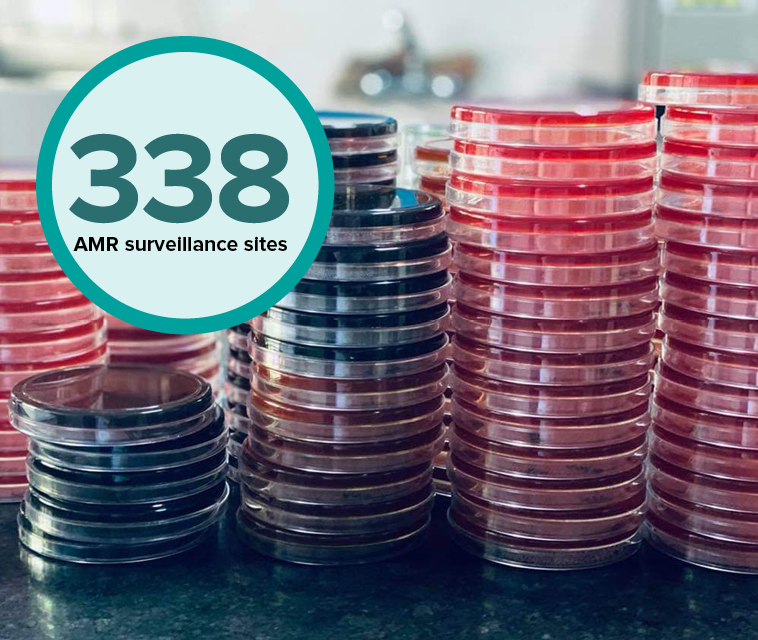
232 out of 338 surveillance sites reporting data submission to national databases
145 out of 189 human health surveillance sites reporting sharing data with international stakeholders
AMR data use: ▾
Papua New Guinea

AMR surveillance data is used to inform clinical practice, with one hospital no longer using chloramphenicol as the first choice for empirical treatment for typhoid fever because of high rates of resistant Salmonella enterica serovar Typhi.
Indonesia

Fleming Fund activities have contributed to the inclusion of AMR indicators in Indonesia’s development plan.
Vietnam

Hospital-level AMU surveillance data and key PPS findings have been reported to participating hospitals to address the need for AMS program strengthening for physicians via the development and implementation of local guidelines and in-service training on antibiotic use.
Malawi

A monthly updated antibiotic dashboard has been developed. This integrates data from multiple sources, such as Central Medical Stores, public supply central warehouses, and all public health facilities.