Evidence-based advocacy: ‘Last-line’ antimicrobial, colistin, in Nepal’s poultry sector
Colistin is a last-resort antibiotic reserved for the treatment of serious multidrug-resistant infections in humans. Recognising its critical importance, Nepal banned the use of colistin in animals in 2017.
However, emerging evidence suggested that despite this regulatory ban, colistin was still rife within the poultry sector. Addressing this gap between policy and practice requires credible, field-generated evidence to inform advocacy and regulatory action on antimicrobial resistance (AMR).
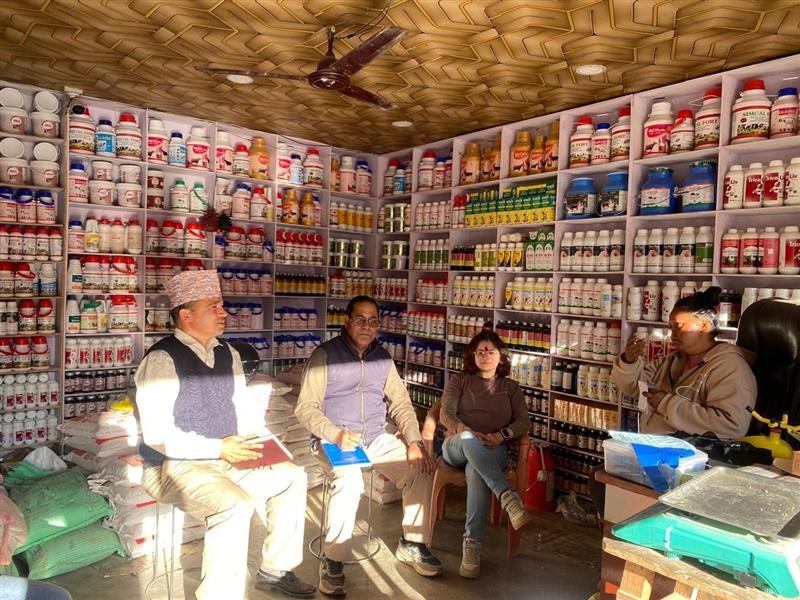
Image above: Farm based AMU data enumerators interacting with an agrovet in Nepal (credit: FHI360)
The Fleming Fund Country Grant for Nepal (FFCGN)–supported initiative, led by FHI360, generated robust, farm-level evidence on antimicrobial use (AMU) in poultry ─ focusing on reducing the use of banned antimicrobials that are also vital to human health, like colistin. This informed national policy, supported regulatory enforcement, and decreased non-therapeutic antimicrobial use, especially for growth promotion in poultry farming.
The overuse of these life-critical antibiotics requires a One Health approach ─ tackling the links between agricultural workers, animal production, food consumption, and surrounding environments ─ through evidence-based advocacy and stakeholder engagement.
Rapid emergence
Continued colistin use carries significant consequences, including the rapid emergence and spread of transferable resistance genes, which undermine its effectiveness as a last-resort antibiotic in human medicine. This threatens the treatment of fatal infections, leading to increased morbidity, mortality, and healthcare costs.
“Resistant bacteria can spread from animals to humans through the food chain, direct contact, and environmental pathways, reinforcing the One Health nature of antimicrobial resistance,” explained Project Director Dr Ritu Amatya. “Persistent use also risks weakening national and global AMR containment efforts, while contributing to long-term environmental reservoirs of resistance.”
The FFCGN team, led by Dr Amatya, were central in designing, implementing, and scaling up farm-based AMU surveys. Beginning in 2020, a pilot AMU survey conducted in poultry farms in Kathmandu Valley tested the feasibility of the tools and informed subsequent surveys, leading to a refined national scheme.
“By 2023, the survey reached 382 broiler farms across all seven provinces of Nepal; expanding to 660 farms nationwide in 2024─2025, in collaboration with FAO, demonstrating institutionalisation and scale,” said Dr Amatya.
- 382
- 2023 ─ farms surveyed
- 660
- 2024─25 ─ farms surveyed
Survey methodology
Conducted by mobilising local veterinarians, the survey process ensured contextual understanding and trust at the farm level. The most recent survey, the Nepal Veterinary Association, was formally engaged to identify and galvanise veterinarians to collect data.
FFCGN iteratively revised and updated the AMU survey protocol, incorporating lessons from earlier rounds and emerging best practice. These included transition from paper-based surveys to digital data collection platforms, use of GPS tagging for farm location verification, moving toward statistical rather than convenience sampling, implementation of field supervision and spot-checks to improve data quality, formalising partnerships for accountability, and refining the survey based on previous response gaps or inconsistencies.
The survey’s standardised questionnaires collected data on:
- Knowledge, attitudes, and practices related to AMU
- Antimicrobial use patterns
- Farm and farmer demographics
- Economic aspects of poultry farming
Stakeholder advocacy tool
Using the KoBo Toolbox, a free, open source platform designed for mobile data collection in field settings with offline availability, ensured easy deployment and higher-quality data. This was followed by data validation and analysis to ensure quality and reliability.
Findings from each round of surveys were systematically shared and discussed with Nepalese government stakeholders, including the National Steering Committee for AMR, National Technical Working Committee (NTWC), the Department of Livestock Services (DLS), and veterinarians, farmers, feed suppliers, and chick suppliers.
“Survey results were used as an advocacy tool to shift discussions from blame to action,” said Dr Amatya. “The consequences of continued colistin use, particularly the risk of resistance and public health impact, were repeatedly emphasised across multiple forums.”
[...] most recent nationwide survey indicates a substantial reduction in colistin use, with the drug no longer appearing among the ten most used antimicrobials in poultry [...] Colistin now ranks around thirteenth, suggesting improved compliance and awareness.
Dr Ritu Amatya, Project Director, Fleming Fund Country Grant, Nepal.
Raising the alarm
Contributing to the effectiveness of the FFCGN initiative, “Strong engagement of DLS in supervision and monitoring of surveys enhanced credibility and minimised doubts on data validity. Use of evidence with clear recommendations, helping depoliticise the issue and reduce inter-institutional disputes,” commented Dr Amatya.
Persistence and repeated engagement, recognising that behaviour and policy change requires time, were also key. “Triangulation of evidence, including media reports, studies from the National Agricultural Research Council, and independent research, reinforced the surveys’ findings.
“Alongside the identification of champions within the system to raise alarms and advocate for action. This aided consistent messaging integrated into interactions with veterinarians, agro-vets, dealers, and farmers,” added Dr Amatya.
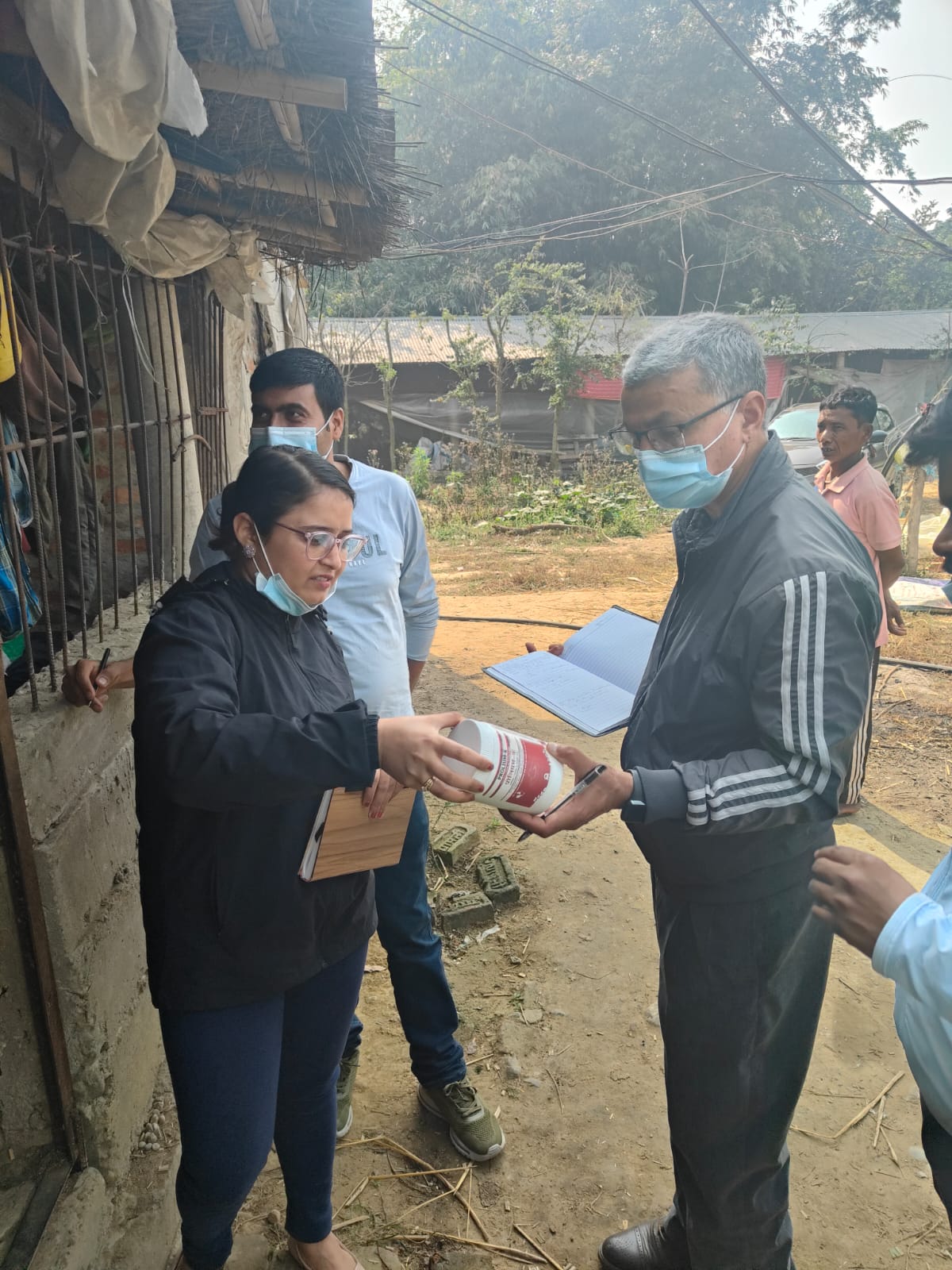
AMU survey monitoring visit in Siraha, Nepal (credit: Pujan Raj Pandley)
Regulatory fragmentation
The project was addressing a highly sensitive issue, with colistin banned for animal use since 2017. “Acknowledging its continued use exposed regulatory weaknesses, triggering initial denial and a tendency among institutions to shift responsibility,” said Dr Amatya.
Dr Amatya went on to explain that such regulatory fragmentation complicated accountability and created significant operational challenges for the initiative, as oversight of antimicrobial use was across multiple agencies with limited coordination.
“The Nepalese Department of Drug Administration regulated imports and manufacturing, the Ministry of Industry in Nepal oversaw poultry feed and hatcheries, and the Department of Livestock Services handled farm-level practices. This division of mandates led to gaps in accountability, with institutions often shifting responsibility and initially resisting acknowledgement of the continued colistin use.
“Weak enforcement capacity, informal supply chains, and industry dependence on antimicrobials further complicated compliance. The sensitivity of the issue led to underreporting and trust deficits among stakeholders, limited awareness, and access to alternatives at the farm level, highlighting a disconnect between policy and practice.”
Substantial AMU reduction
Although proposals for a joint investigative committee did not come to fruition, parallel developments, such as investigative media reports, investigations of dealers selling antimicrobials illegally, and awareness programmes, helped keep momentum and public attention.
The 2023 survey revealed that 87% of farms used antimicrobials, with colistin among the top five most reported drugs. These findings catalysed policy discussions at the NTWC and further afield.
- 87%
- Farms surveyed used antimicrobials
- Top 5
- Colistin, fifth most reported drug
“Encouragingly, the most recent nationwide survey indicates a substantial reduction in colistin use, with the drug no longer appearing among the ten most used antimicrobials in poultry,” said Dr Amatya. “Colistin now ranks around thirteenth, suggesting improved compliance and awareness.”
The reduction should lower the ‘selective pressure’ for colistin resistance in poultry pathogens, reduce spillover risk to human health, strengthen the One Health collaboration, and diminish cross-over effects between the animal and environmental sectors.
Dr Amatya explained that selective pressure is the evolutionary effect whereby the use of an antibiotic such as colistin favours the survival and production of resistant bacteria while removing susceptible ones.
“Sustained use in poultry production, therefore, accelerates the emergence and spread of resistance, including transferable genes. Reducing colistin use lowers this pressure, limiting the competitive advantage of resistant strains and helping to curb the development and dissemination of resistance within and beyond the animal sector.”
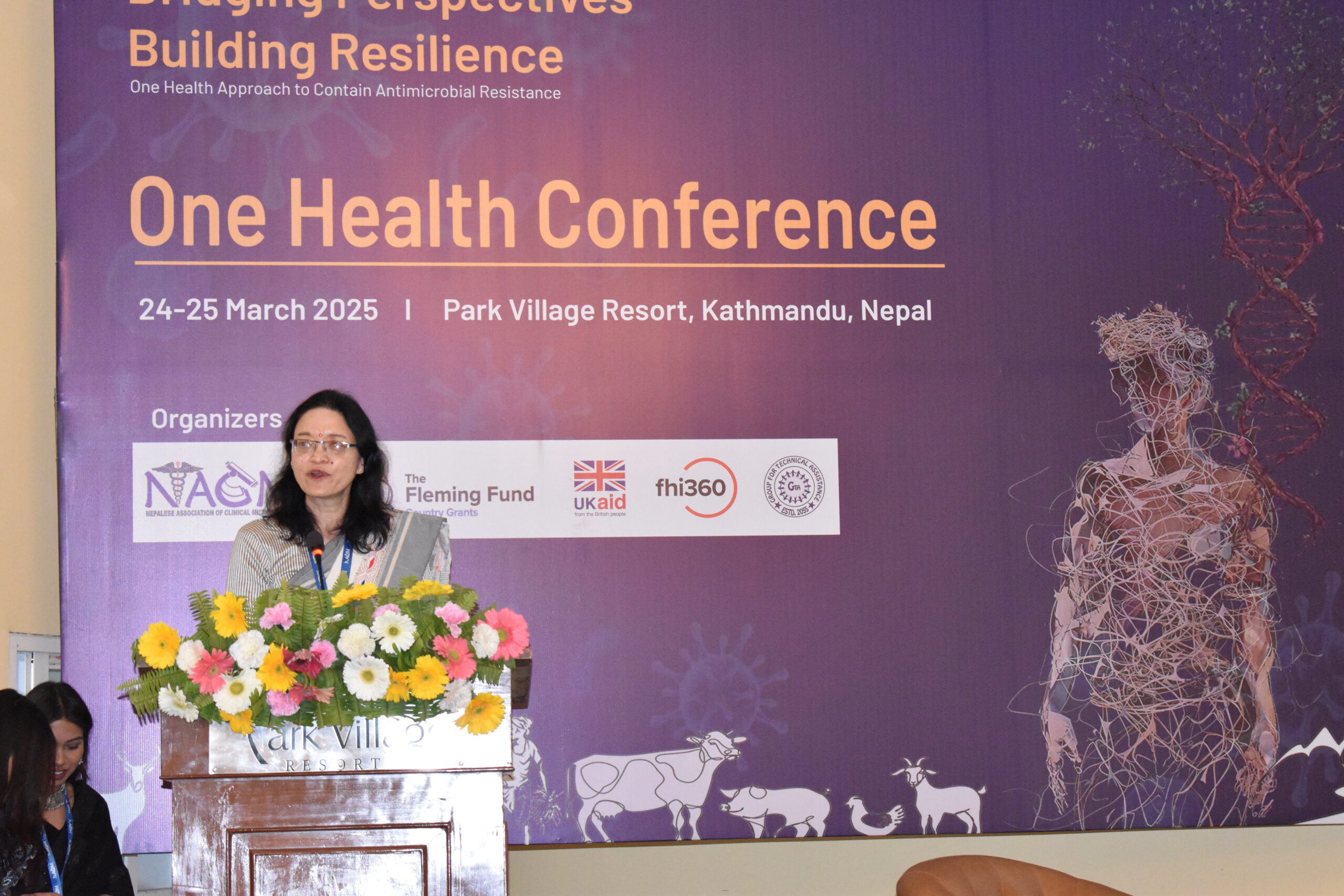
Dr Ritu Amatya at a One Health Conference in Nepal
Guiding policy and practice
Although Fleming Fund support has concluded, the project has achieved its core goal of embedding evidence-informed decision-making, added Dr Amatya: “Key stakeholders are now more acutely aware of the AMU issue in the poultry sector – reinforcing the One Health framework – reducing the impact of AMR across human and environmental health.
“The sustained impact lies in the continued use of evidence to guide policy and practice, with protocols now in place for future surveys, reinforced by established partnerships and institutional memory,” added Dr Amatya. “Continued advocacy and periodic surveillance will be essential to ensure that gains, particularly reductions in the use of banned and critically important antimicrobials, are not lost.”
More Like This
Stories
From Stories, Transforming AMR surveillance in Nepal through data automation , Date: 30/04/2025
Antimicrobial resistance (AMR) data is vital for informing local interventions, enabling hospitals to improve infection control and treatment strategies. With Fleming Fund Country Grant investment, the Robotic Process Automation 'bot' technology was introduced − now operational in 23 out of 26 hospitals − to support Nepal’s AMR national surveillance network and health policy reform.
Journal Articles
From Journal Articles, Fellowship Publication: Antibiotic use among poultry farmers in Ghana, Dormaa Municipality , Date: 31/12/2020
Antibiotic use has contributed significantly to many successes in human medicine and improvement in animal welfare. There is however global concern about non-regulation of antibiotics in food producing animals due to the great threat it poses to public health. This publication was co-written by Fleming Fund Fellow, Mary Nkansa.