Navigating falsehood in microbiology data
In April, I delivered my first lecture as Professor of Medical Microbiology at the University of Ghana Medical School. My lecture was titled, 'When microbes speak and data appear inconsistent, are we witnessing falsehood or truth?'
Antimicrobial resistance (AMR) surveillance must be deliberately engineered through robust systems, standardisation, and continuous quality improvement. Poor-quality surveillance data can lead to inappropriate antimicrobial treatment decisions, misinformed public health interventions and distorted national resistance trends. The integrity of AMR surveillance, therefore, is foundational to patient safety, institutional credibility and global health security.

In many low- and middle-income countries, including Ghana, AMR surveillance data is increasingly used to guide treatment decisions, inform national policies and contribute to global reporting platforms. While this progress is encouraging, it also highlights variances in surveillance data. This raises an important question: When resistance patterns vary across laboratories, regions or time periods, are we seeing true epidemiological change, or weaknesses within surveillance systems?
I explored this question in my lecture and framed this distinction through what I described as ‘truth’ and ‘falsehood’ in AMR surveillance.
‘Truth’ refers to data that accurately and reproducibly reflects genuine microbial realities: true resistance mechanisms, verifiable epidemiological shifts and the natural evolution and spread of resistant organisms. ‘Falsehood’, on the other hand, does not imply dishonesty but, rather, arises from inconsistencies in laboratory methodologies, poor quality reagents, outdated interpretive standards, inadequate quality assurance systems or suboptimal testing conditions.
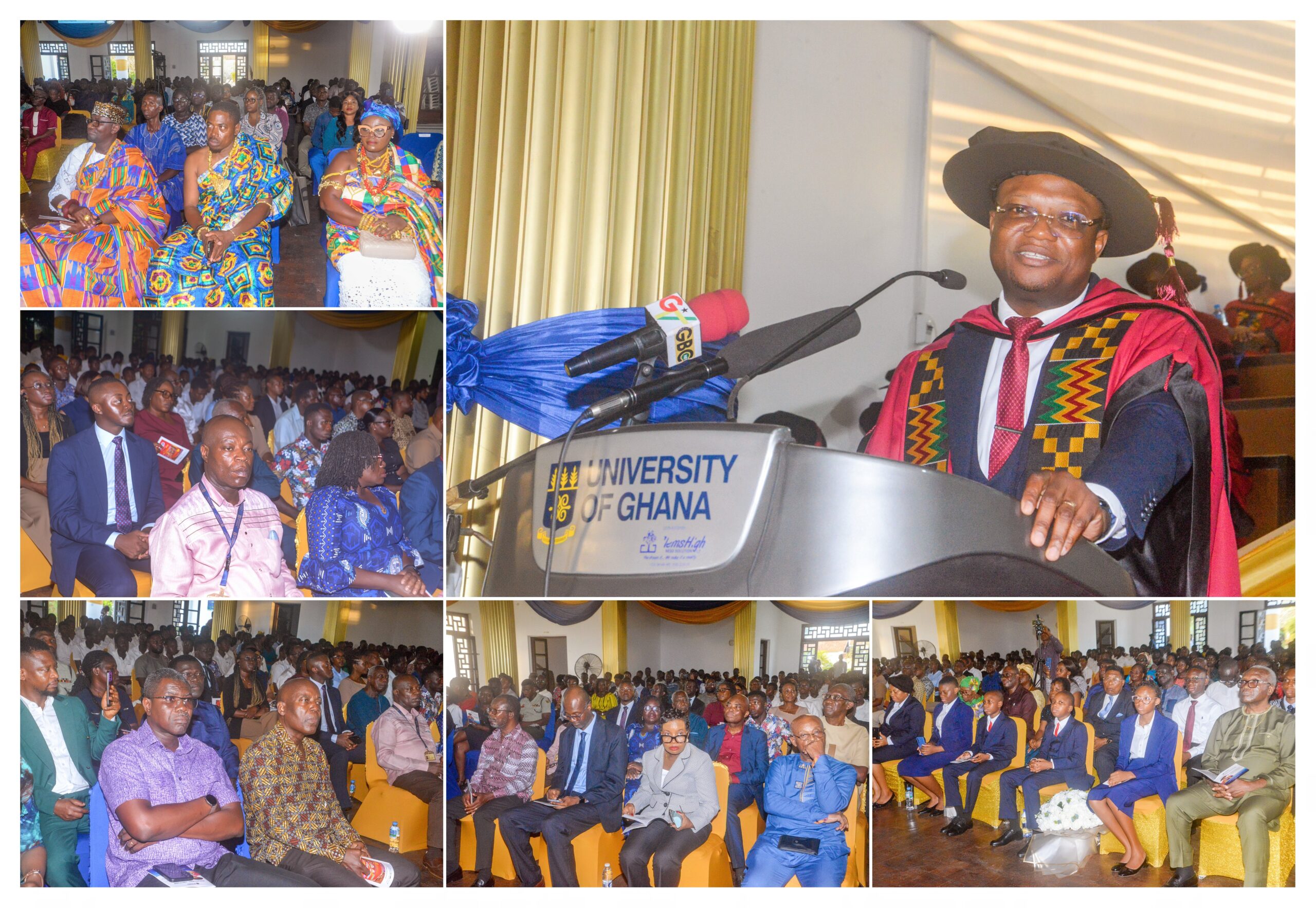
Lecture attendees at the University of Ghana (credit: University of Ghana)
Understanding variability in AMR data
A central focus of my lecture was the simple but powerful principle: when microbes ‘speak’, our surveillance systems must be able to hear them clearly. This underscores that accurate detection of AMR is just as important as bacterial identification itself, as errors in susceptibility reporting can lead to inappropriate treatment and serious clinical consequences.
I emphasised that variability in AMR data can stem from three main sources:
- True epidemiological changes in bacterial populations.
- Methodological limitations within surveillance systems.
- Biological variation, where resistance is real but depends on specific testing conditions.
To illustrate this complexity, I used the example of inducible clindamycin resistance, caused by erm genes. In this case, bacteria may appear susceptible during routine testing but can become resistant under certain conditions unless additional tests are carried out.
I also drew on examples from national surveillance initiatives supported by the Fleming Fund. These included efforts to strengthen proficiency testing schemes, harmonise Antimicrobial Susceptibility Testing practices across sectors, and improve the reliability of AMR detection in human, animal, and environmental laboratories using a One Health approach.
Building stronger surveillance systems is not just a technical priority, but a health imperative. It enables scientists and researchers to distinguish truth from falsehood while better understanding the limitations within our own systems.
Prof Nicholas T.K.D. Dayie, Medical Microbiology at the University of Ghana
Surveillance as an integrated ecosystem
My journey to academia has been shaped by 20 years of research, mentorship and institutional and international collaboration on AMR surveillance and laboratory system strengthening. While this lecture was a professional milestone, it was also shaped by my experience as a Fleming Fund fellow.
I was part of the Fleming Fund Fellowship Scheme from 2018 to 2020, working with Prof Richard Stabler at the London School of Hygiene and Tropical Medicine. During this time, I gained exposure to advanced approaches in laboratory quality management systems, external quality assessment frameworks, molecular epidemiology, and AMR surveillance architecture.
This experience shifted my thinking from studying isolated bacterial resistance patterns to understanding surveillance as an integrated ecosystem. It also influenced my contributions to national AMR initiatives in Ghana, including work within the Antimicrobial Resistance Platform of Ghana and the national AMR Surveillance Technical Working Group.

Prof Nicholas T.K.D. Dayie presenting his inaugural lecture at the University of Ghana
Looking ahead, my research and work will continue to focus on advancing integrated and sustainable AMR surveillance systems within a One Health framework. This includes advancing laboratory quality management systems, supporting national proficiency testing programmes, enhancing genomic surveillance capacity and strengthening collaboration in the human health, veterinary, food, and environmental sectors.
In Ghana, the future of reliable AMR surveillance depends on sustained investment in laboratory systems strengthening, workforce capacity building, digital surveillance infrastructure, and national coordination mechanisms. Building stronger surveillance systems is not just a technical priority, but a health imperative. It enables scientists and researchers to distinguish truth from falsehood while better understanding the limitations within our own systems. In turn, this supports more accurate data interpretation and provides a roadmap for continuous improvement, both of which are critical to addressing the complex challenge of AMR.
Following the lecture, Prof Dayie participated in media engagements focused on antimicrobial resistance and public education on the growing threat it poses to global and national health (examples below)
More Like This
Since 2019, Fleming Fund grantee, International Vaccine Institute (IVI), has led the CAPTURA consortium to expand the volume of historical data for antimicrobial resistance (AMR), consumption (AMC), and use (AMU) across 12 countries in South and Southeast Asia.
Data is a powerful tool in the global effort to tackle antimicrobial resistance (AMR). It transforms disease surveillance into actionable insights and provides the evidence for effective policy decisions. Numbers alone, however, are not enough. For data to truly drive change and offer a clear picture of AMR from local to global levels, it must be standardised, coordinated and reliable.