Optimising AMR surveillance in animal health
Sustainable AMR surveillance for animal health is a One Health challenge for low- and middle-income countries ─ cross-cutting across human, animal and environmental health sectors. As part of a Value for Money series, a new review highlights how countries can continue producing high-quality AMR data in the animal health sector, moving beyond donor support.
Drawing on case studies from Zambia and Nepal, ‘Optimising AMR surveillance in animal health’ examines the costs, feasibility, and long-term sustainability of different surveillance models. This ranges from farm-based sampling to abattoir, opportunistic (integrated into routine activities with available resources), and wastewater approaches.
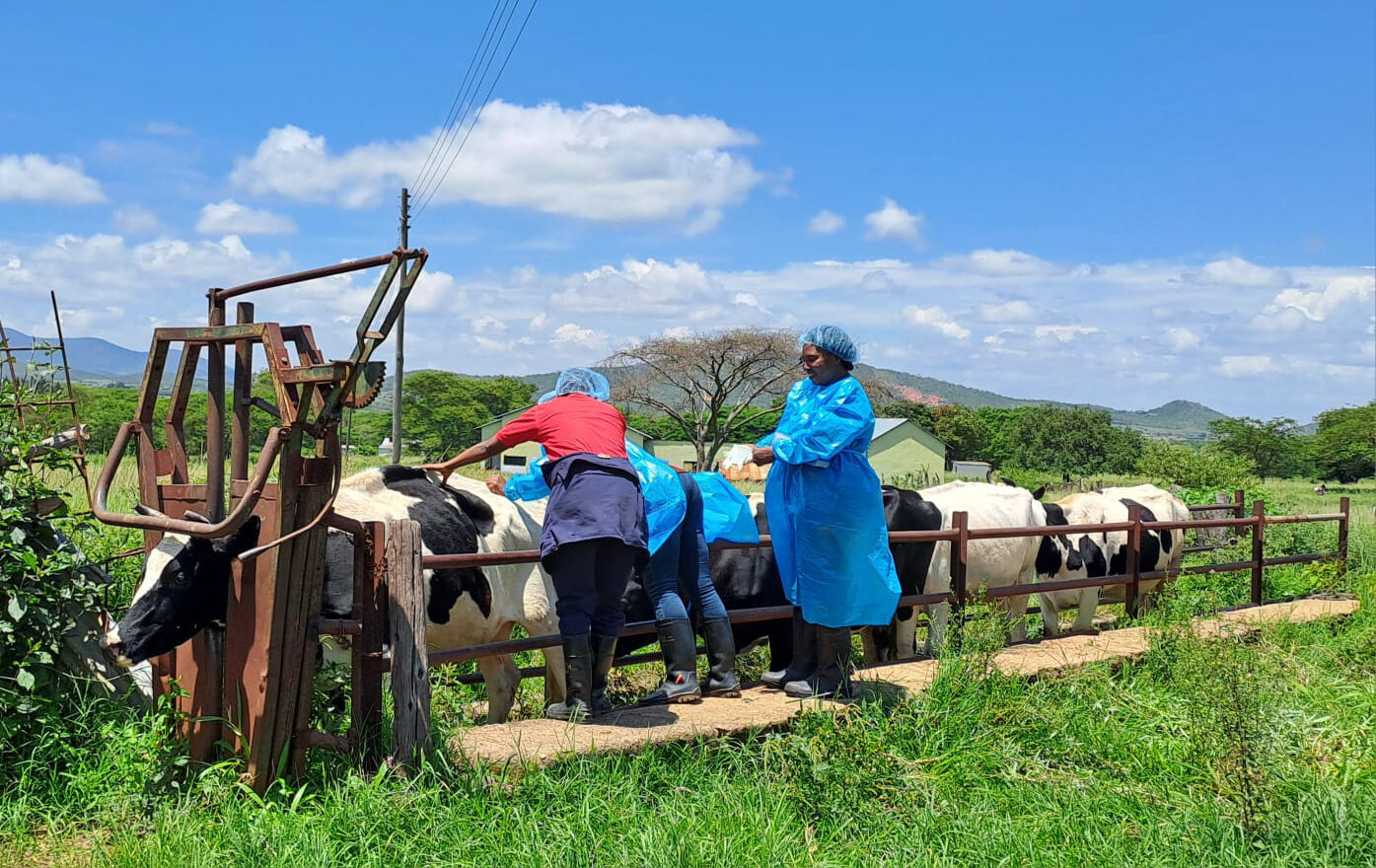
The review's findings reveal striking contrasts:
In Zambia, farm-based active surveillance helped build essential laboratory capacity and generate valuable baseline AMR/AMU data, but remains expensive and difficult to sustain, with estimated ongoing costs up to £280 per sample. Heavy reliance on external funding creates a clear risk once the Fleming Fund ends, as the Country Grant contributed a substantial share of the estimated ongoing cost base (around 37%).
Nepal, meanwhile, has evolved a more adaptive and integrated One Health system. By shifting sampling to slaughter sites and incorporating environmental surveillance, the country has reduced costs to around £126 per sample while strengthening One Health coordination. Evidence generated from surveillance activities has supported major policy wins, including a ban on colistin in animal feed and the development of an essential veterinary medicines list.
National priorities
Comparative modelling shows that alternative strategies, especially abattoir (approx. £165 per sample), opportunistic (approx. £184 per sample), and wastewater (approx. £160 per sample) sampling, could significantly cut costs while maintaining a steady sample throughput. These approaches trade some traceability for affordability, scalability, and routine data flow.
With the right targeted investments, countries can build on the infrastructure and expertise already in place, shifting toward sampling approaches that are both cost-efficient and aligned with national priorities. Strengthening these systems will ensure that high-quality animal health AMR data continues to inform policy, planning, and resource allocation.
Optimising AMR surveillance in animal health: A Case Study Review
View pdf Optimising AMR surveillance in animal health: A Case Study Review (4.97 MB)Optimising AMR surveillance in animal health: Appendices
View pdf Optimising AMR surveillance in animal health: Appendices (2.50 MB))More Like This
Knowledge Notes
From Knowledge Notes, One Health: breaking down silos and driving the Fleming Fund forward , Date: 03/11/2023
To mark One Health Day, we revisit the holistic concept spanning human, animal, and environmental health, which is one of the Fleming Fund’s guiding principles.
Supported by the Technical University of Denmark (DTU), AMR Surveillance Fleming Fellow Mabel Aworh focused her research on understanding and tracking antimicrobial resistance (AMR) in animals, providing valuable insights into how drug-resistant bacteria spread between animals and humans in slaughterhouse environments in Abuja and Lagos, Nigeria. The study 'Rare serovars of non-typhoidal Salmonella enterica isolated from humans, beef cattle and abattoir environments in Nigeria' was published in [PLOS ONE](https://journals.plos.org/plosone/article?id=10.1371/journal.pone.0296971).