Papua New Guinea advances toward sustainable AMR surveillance
National workshop demonstrates strong multisector commitment
Papua New Guinea (PNG) has taken an important step toward securing the long-term sustainability of its antimicrobial resistance (AMR) surveillance system through a recent high-level AMR Surveillance Sustainability Workshop, led by the national AMR Secretariat.
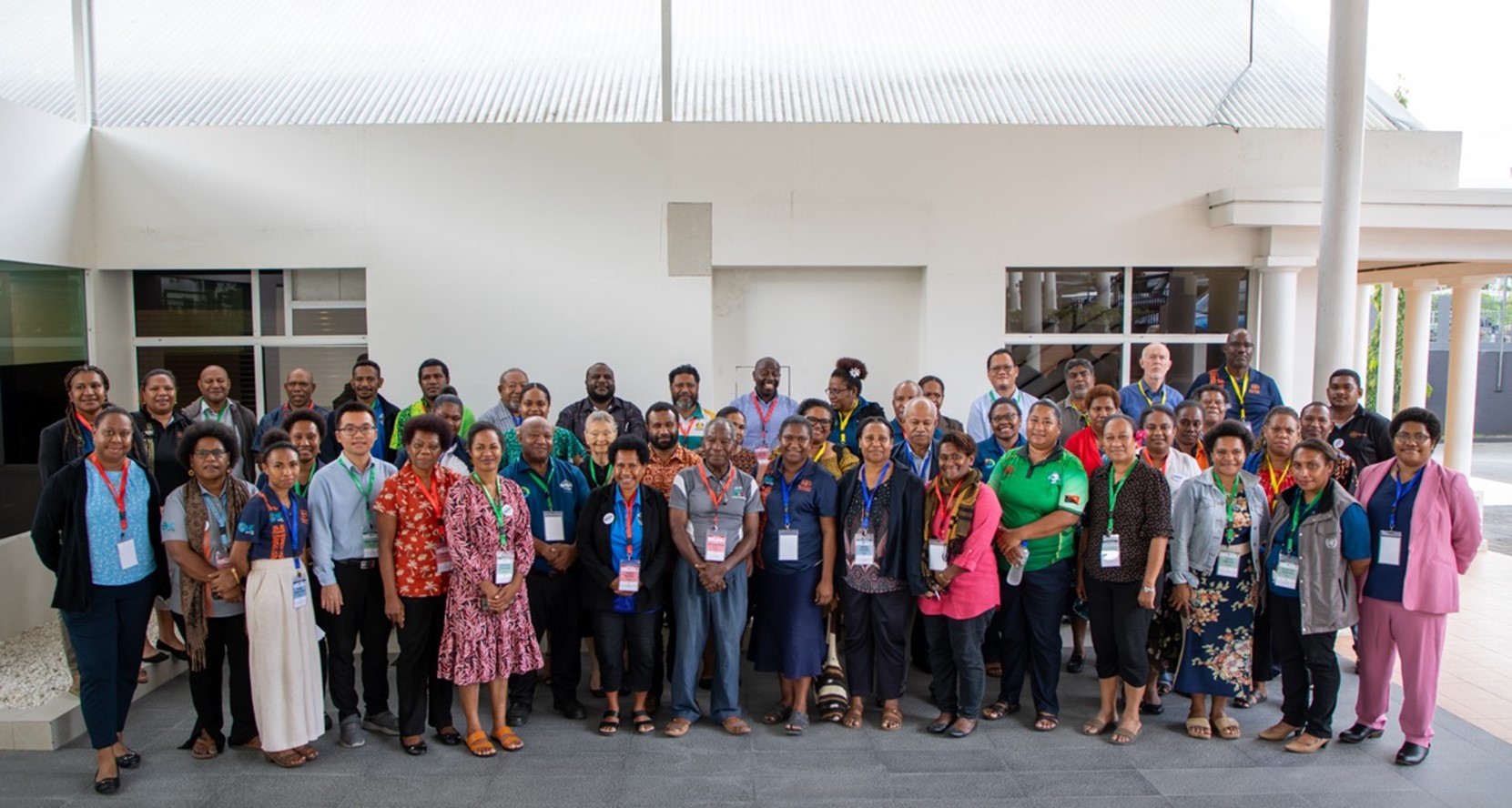
Image above: Participants from across sectors joined the national AMR Sustainability Workshop in Port Moresby (credit: Burnet Institute).
Since 2020, the Fleming Fund has invested over £10 million (61M PGK) to strengthen Papua New Guinea’s AMR surveillance system. This investment has supported major laboratory upgrades, improved diagnostic capability, strengthened data reporting to the World Health Organization, Food and Agriculture Organization and World Organisation for Animal Health, enhanced workforce development, and boosted cross-sector collaboration under the One Health approach.
Last month, the workshop held at Port Moresby supported by the Fleming Fund Country Grant (FFCG), was one of the most extensive multisector AMR gatherings held to date in PNG. For the first time, all implementing agencies came together to work towards a shared transition pathway for sustaining surveillance beyond Fleming Fund support, which concludes in March 2026. The grant team at the Burnet Institute share how the event shaped the AMR Surveillance Sustainability Action Plan (2025–2027).
National ownership milestone
The workshop brought together over 60 representatives from human and animal health, environmental agencies, academia, and development partners. Providing key inputs and ideas around the AMR Surveillance Sustainability Action Plan, structured around five sustainability pillars: Governance & Policy, Financing, Laboratory Systems, Surveillance Systems, and One Health.
Participants, during the workshop, were invited to complete an anonymous online survey to analyse opinions and attitudes regarding sustainability, informing the development of the Sustainability Action Plan, including implementation timeline and risk-mitigation measures.
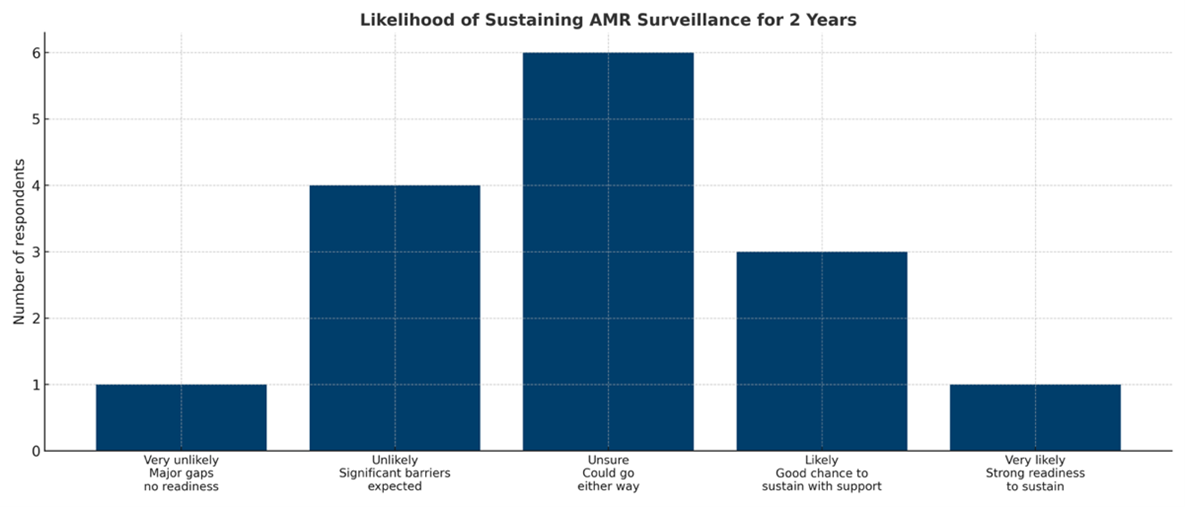
Workshop participants’ assessment of their ability to sustain AMR surveillance without external support (credit: Burnet Institute).
Key results showed:
- Institutions (57%) identified a low likelihood of maintaining AMR activities without external support.
- The most urgent resource needs were supplies, equipment maintenance, staffing, training, funding, and LIMS/ICT support.
Such strong multisector collaboration, evidence-driven planning, and the introduction of economic analysis signal increasing national ownership and readiness while positioning PNG as a leader in integrated AMR sustainability.
Possawat Jorakate, Burnet Institute.
Economic evidence and new thinking
A highlight of the workshop was the presentation of PNG’s first AMR economic analysis, which outlined the financial implications of AMR surveillance capacity once donor funding ceased. A key outcome is that sustaining AMR surveillance costs far less than responding to uncontrolled outbreaks.
For many participants, it was the first time AMR had been framed through an economic lens. The session was enthusiastically received and productive, illustrating:
The session was enthusiastically received and productive, illustrating:
- The economic burden of AMR on PNG’s health system.
- How targeted surveillance investment can reduce long-term costs.
- The financial risks linked to supply shortages and equipment downtime.
- The high return on investment of maintaining core AMR functions.
Shaping future AMR
It was clear from the participants' dedication and momentum in the room that they were determined to shape PNG’s AMR future. This focus translated into results, successfully producing a comprehensive AMR surveillance sustainability matrix that covered all sectors and reflected the five sustainability pillars. Following the event, the FFCG team compiled the participants’ outputs into the first draft of the PNG AMR Surveillance Sustainability Action Plan, which has been circulated for review and will be finalised by the AMR Secretariat.
“The workshop demonstrates PNG’s growing commitment to embedding AMR surveillance as a core national health security activity,” said Possawat Jorakate, Team Leader - Technical Lead, Fleming Fund Country Grant, Burnet Institute. “Such strong multisector collaboration, evidence-driven planning, and the introduction of economic analysis signal increasing national ownership and readiness while positioning PNG as a leader in integrated AMR sustainability.”
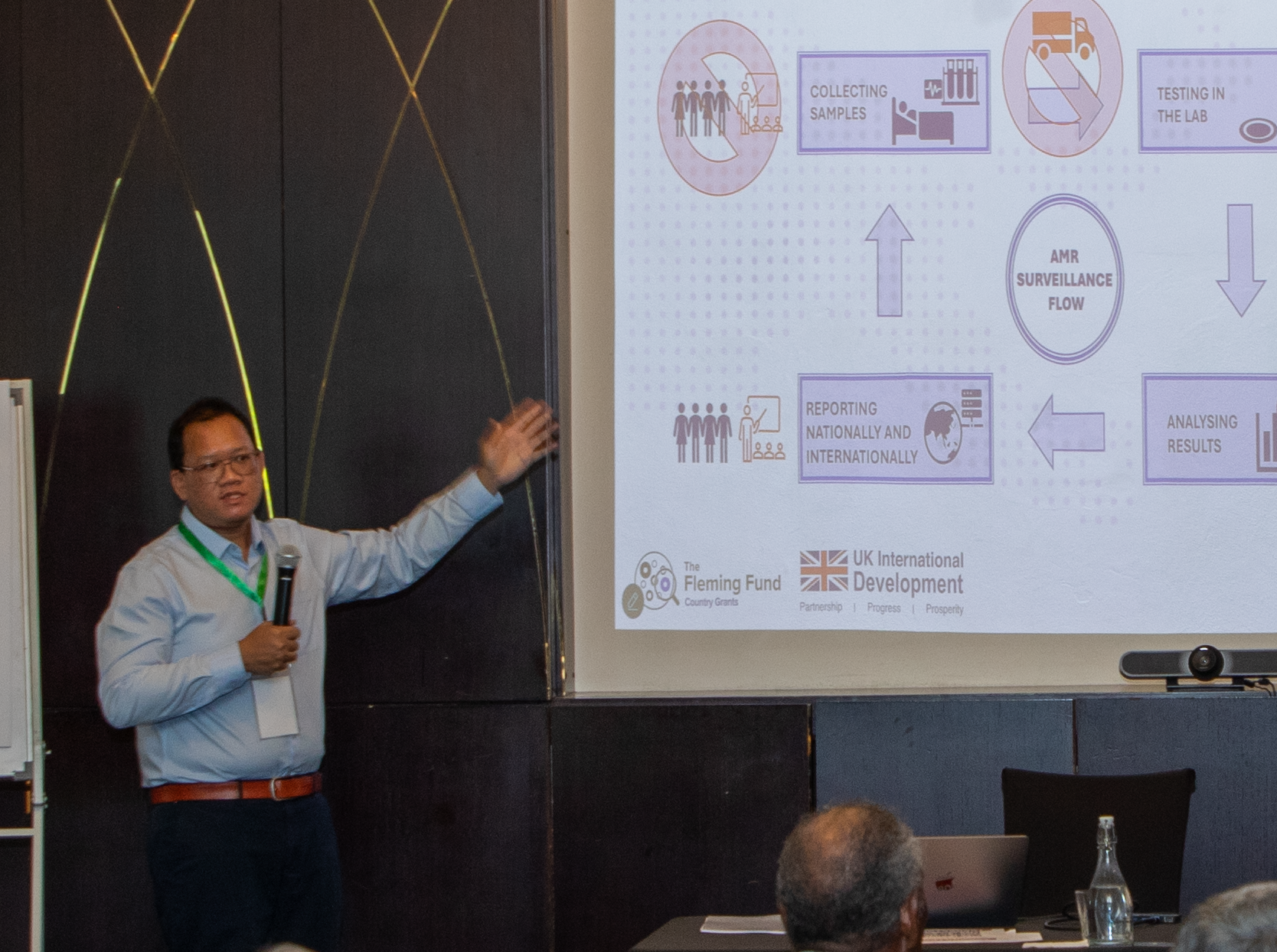
PNG’s AMR economic analysis session generated strong engagement and discussion (credit: Burnet Institute).
The Fleming Fund remains committed to supporting PNG through this transition period, ensuring the progress made since 2020 is maintained to provide in-country benefits. Dr Jonah Kurubi, Director Medical Services & Chairman, Drug and Therapeutics Committee, Mt Hagen Specialist Hospital, said: “The systems, skills, and partnerships developed under the Fleming Fund will continue to guide our progress well into the future.”
Dr Dora Lenturut, Acting Deputy Secretary National Health Standards and Compliance, and AMR focal point for the National Health Department, emphasised the importance of continued collaboration: “AMR remains a major public health threat for Papua New Guinea. The work we have started through the Fleming Fund has laid strong foundations, and this workshop ensures we carry those gains forward with clear commitments, strong coordination, and country ownership.”
More Like This
Before the Fleming Fund investment, Papua New Guinea had limited capacity for surveillance of antimicrobial resistance (AMR). Laboratory systems were fragmented, with inconsistent diagnostic capacity, a lack of standardised protocols, and minimal data sharing between hospitals and national health authorities.
Speech given by the UK High Commissioner to Papua New Guinea (PNG) supporting the opening of the 1st National antimicrobial resistance (AMR) Forum.