Sustaining AMR surveillance beyond the Fleming Fund
An analysis of enablers and blockers
This report provides analysis and lessons from implementing the Fleming Fund, drawn from a series of country case studies, to support continuation of AMR surveillance after the programme closes.
The focus countries are Bangladesh, Kenya, Indonesia, Nigeria, Pakistan, Uganda and Vietnam – whose journeys towards sustainability offer rich learning, identifying enablers that are helping countries transition to full country ownership.
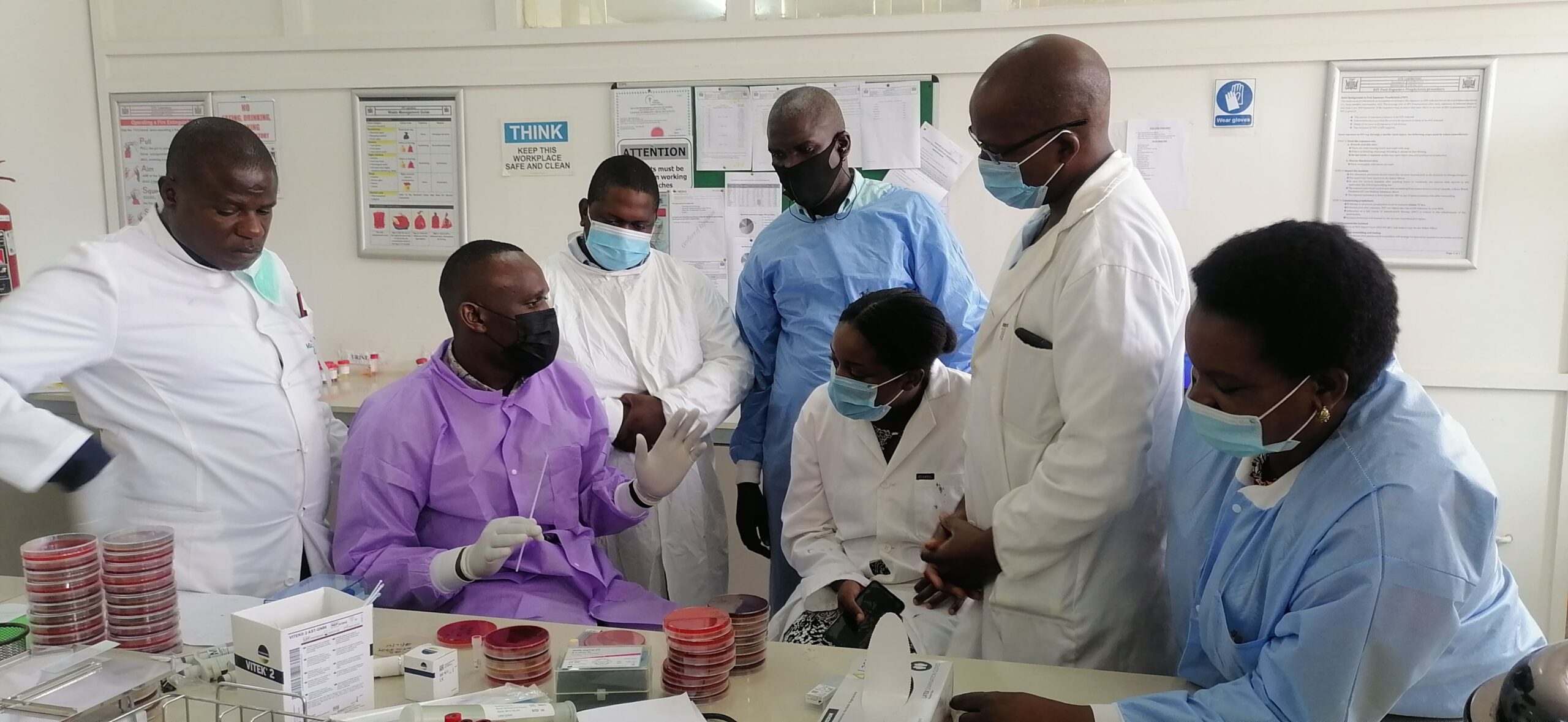
Country ownership
These enablers include political champions, economic evidence, multi-sectoral and devolved approaches – alongside challenges or blockers of sustained AMR surveillance, such as the cost of consumables and reagents, sporadic involvement of the private sector, and the cost of vertical approaches such as active surveillance in the animal health sector.
Findings are organised in three thematic sections: government ownership and budget allocation, retention of technical capacity, and integration of data use, all important pillars of sustainability that have been addressed particularly during the programme’s second phase.
Sustainability gaps
Looking at the common sustainability gaps across countries, we identify the importance of systems strengthening approaches and the potential for more coordinated ‘optimised’ solutions going forward. A key finding is the need to advocate for bacteriology testing, which offers dual benefits: improved patient care and the generation of AMR surveillance data for national health security, as part of a ‘health systems strengthening’ approach.
As external funding is now less assured, while demands on domestic budgets continue to increase, integrating AMR as part of broader health and other multi-sectoral programmes is required. We also identify possible opportunities for continuing some of the successful elements of the Fleming Fund – such as pooled procurement and the programme’s Fellowship Scheme – through existing programmes.
Sustaining AMR surveillance beyond the Fleming Fund Report
View pdf Sustaining AMR surveillance beyond the Fleming Fund Report (2.42 MB)Sustaining AMR surveillance beyond the Fleming Fund Report - Summary
View pdf Sustaining AMR surveillance beyond the Fleming Fund Report - Summary (686.91 KB))More Like This
Events
From Events, Act Now: 'Protect Our Present, Secure Our Future' – WAAW 2025 , Date: 18/11/2025
To mark this year’s World Antimicrobial Awareness Week (WAAW) theme, we ask some of our partners what the Fleming Fund has meant to them.
Events
From Events, Papua New Guinea advances toward sustainable AMR surveillance , Date: 13/12/2025
Papua New Guinea (PNG) has taken an important step toward securing the long-term sustainability of its antimicrobial resistance (AMR) surveillance system through a recent high-level AMR Surveillance Sustainability Workshop, led by the national AMR Secretariat.